International Film Festival Rotterdam
金虎獎短片競賽提名

金虎獎短片競賽提名
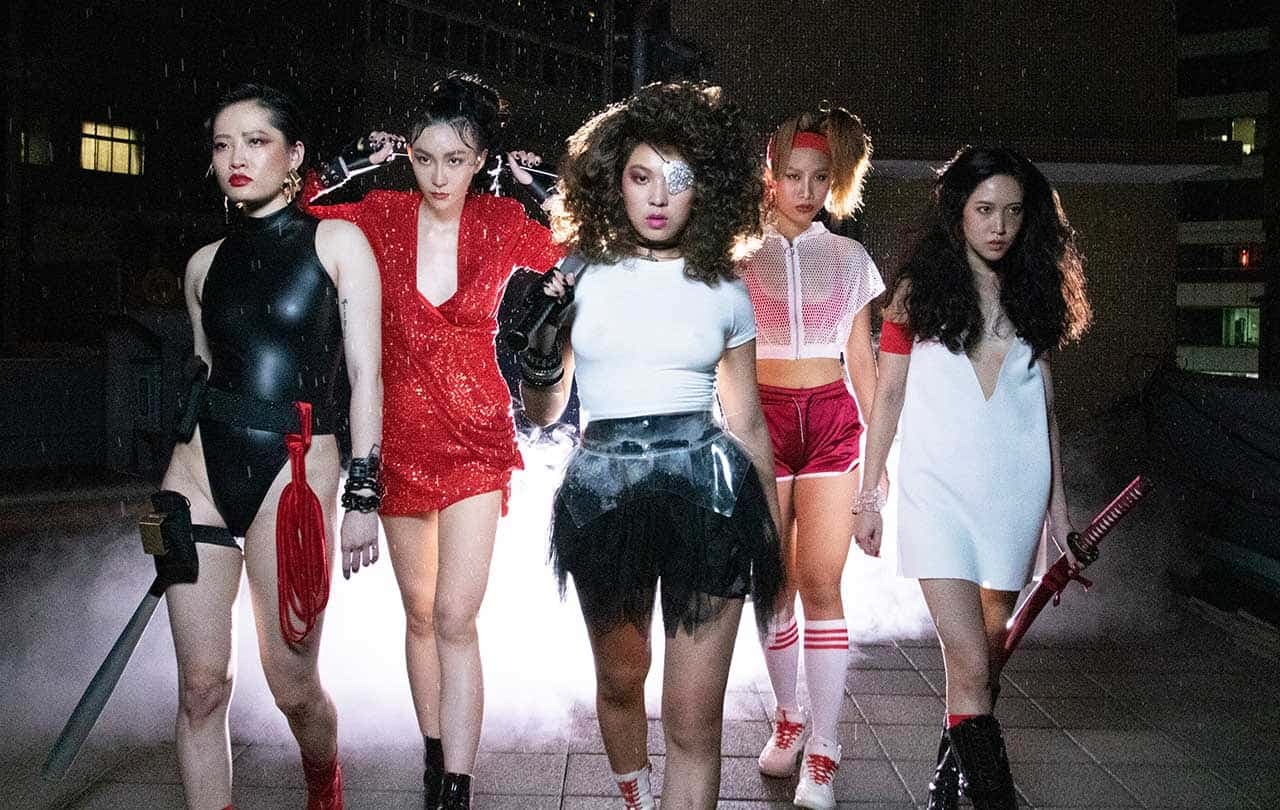
「深度偽造」(deepfake,簡稱「深偽」)因被不當地利用來製作換臉色情影片而極具爭議,該拿這種數位性犯罪怎麼辦也是#MeToo運動行走至今將必須回應的棘手問題。蘇匯宇卻利用「深偽」參與演出,他在片中化身成曾主演《上海社會檔案》(1981)、《瘋狂女煞星》(1981)等女性復仇黑電影的陸小芬,忽隱忽現地出現在五位復仇女子的後方,彷彿共同參與這場對男性的報復。某程度上,若說#MeToo運動也可說是一場復仇運動,這樣看來,蘇在這部女性復仇電影中運用「深偽」就更引人深思。
(承上則)蔡揚名的《女性的復仇》由楊惠姍主演,她在片中的獨眼造型堪稱經典。正因為有了蘇匯宇的《女性的復仇》,我們得以重新把楊惠姍的造型也視為「補拍」,因為它取材自瑞典經典強暴與復仇片《性女暴力日記》(Thriller: A Cruel Picture,1973)之女主角的形象。而來到蘇的「補拍」,一開場便站在最中間,在五位復仇女子中被凸顯為首領的,也是一位瞎了左眼並戴著眼罩的女子。
(承上則)然而強暴與復仇並非西方獨有,也早已傳入東亞,成為當地電影的參照對象。就台灣而言,最能在1970年代末、1980年代初盛行的「社會寫實片」(又稱「黑電影」)見其痕跡。「女性的復仇」這個片名的直接指涉對象、歐陽俊執導的《女性的復仇》(1982)便是一例。而在更早之前,林福地執導的台語片《女性的命運》(1965)又名《女性的復仇》。如今,台灣影史上至少有三部《女性的復仇》,最新出自蘇匯宇的這部有著承先啟後的意義。
單看片名或會馬上聯想到強暴與復仇(rape and revenge)這個隸屬於剝削電影的次類型。在影史上,它至少可追溯至柏格曼(Ingmar Bergman)的《處女之泉》(The Virgin Spring,1960),但相比之下被影評人斥為「半點藝術性也沒有」的《我唾棄你的墳墓》(I Spit on Your Grave,1978)更能反映此片種的爭議之處:強暴既是片中必要橋段,對女性的剝削是少不免的,但受害女性最終報復了加害者,當中是否存在女性培力從而翻轉權力不對等的可能性?
「補拍」(pick up或re-shooting)是蘇匯宇近年的創作方向。這個電影術語原是指重新拍攝拍壞了的某一幕,蘇匯宇將之運用於重新演繹過去的作品:2016年的《存在與虛無》(1962)重新演繹張照堂1962年的同名作品,2017年的《屁眼.淫書.速可達》重新演繹活躍於1990年代的台灣渥克劇團,2018年的《唐朝綺麗男》重新演繹邱剛健1985年的同名作品,2020年《女性的復仇》則是揉合多個女性復仇文本的重新演繹。
0:42 蘇匯宇扮裝現身: 短片開場,六位少女中的最後一位,由蘇匯宇喬裝扮演。藝術家男扮女裝,一起展開報仇行動。他/她還現身於片末的屠宰場橘色門簾後,冷眼旁觀。此外,透過「深偽」(deepfake)人工智慧的人體圖像合成技術,藝術家的臉時而是自己的,時而浮現的卻是陸小芬在《瘋狂女煞星》與《上海社會檔案》(1981)中的特寫。
1:00 戴獨眼罩女子: 此形象引自蔡揚名的《女性的復仇》(1981)中楊惠姍的獨眼裝扮。但在它之前,更早出現於瑞典影片《性女暴力日記》(Thriller: A Cruel Picture, 1973)裡的女主角形象。當然,這也讓人聯想起美國影片《追殺比爾》(Kill Bill, 2003)中的「加州山毒蛇」(California Mountain Snake)女殺手。
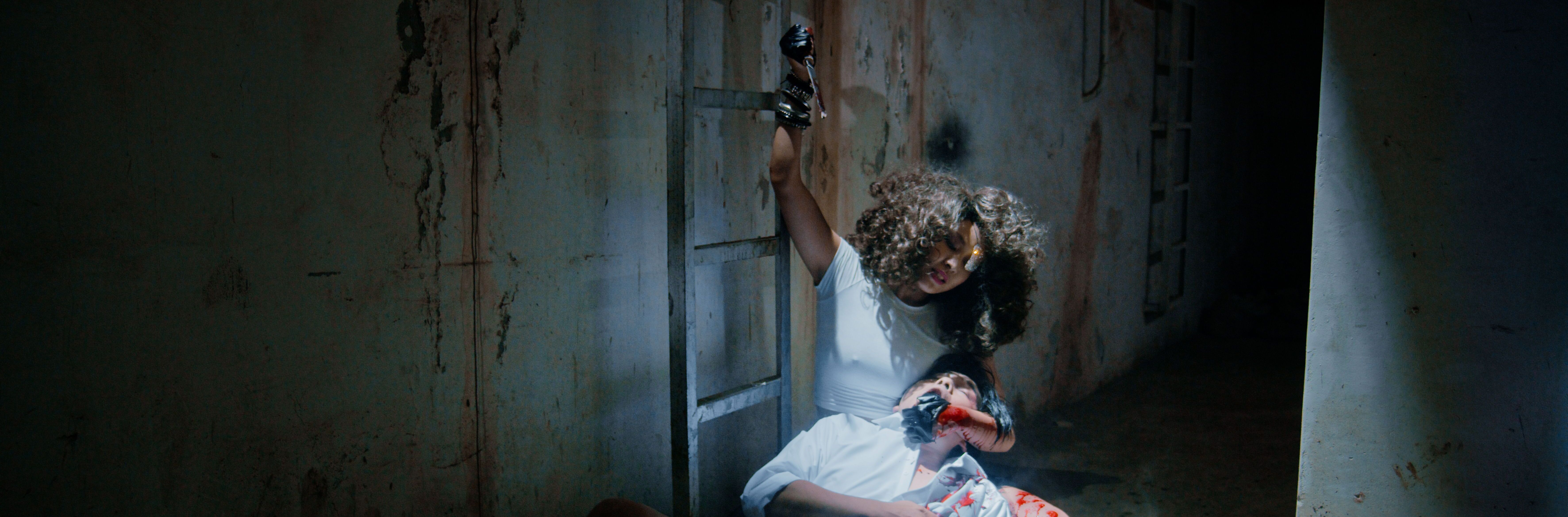
6:00 屠宰場: 場景指涉《瘋狂女煞星》(楊家雲,1981)中的女主角陸小芬向強暴她的男人尋仇的地點。因此,蘇匯宇將拍攝場地選在臺北數位藝術中心(天臺、樓梯間、地下室等),因為其前身為「臺北第四號肉品包裝廠」。據說,《瘋狂女煞星》上映前曾遭電檢剪去一具被懸吊起來的男性屍體的畫面。為此,藝術家故意在展場中鋪上紅色地毯,並透過懸掛五台液晶螢幕呈現短片《女性的復仇》的方式,體現血淋淋的造型。

Female power is finally on the rise! Nearly half of the world’s population is female, yet the attention and resources women receive remain disproportionately low. What are women thinking? Are they truly happy living in today’s society? Do they have access to the resources they need to fulfill their potential? Are women born gentle and obedient—or are they shaped that way? What does it take for a woman to become a woman? What kind of “femininity” has been predefined by families and social norms? These documentary films explore the many facets of womanhood—the struggles, the expectations, and the remarkable stories of women who defy conventions and fight to become their truest selves. Is female empowerment truly here? We’ve come a long way, but there’s still much more to do.

A sharp, compact poem often speaks louder than a lengthy speech! Giloo presents a curated collection of small but powerful documentaries—short films that, within a limited runtime, deliver layered, resonant stories. Experience the elegance of cinematic brevity, and see how precision in visual storytelling can leave a lasting impression.

On August 28, 1982, Time Story premiered, marking the beginning of the Taiwan New Cinema Movement. In the summer of 2022, HIDE & SEEK AUDIOVISUAL ART released The Time Ahead: A Memo to 40 Years of Taiwan New Cinema, revisiting this pivotal era through 20 key concepts. In the fall, the Taiwan Film and Audiovisual Institute will present a special retrospective titled When New Cinema Begins Again: 40 Years of Taiwan New Cinema, uncovering many long-overlooked gems hidden in the corners of film history. Between summer and fall, TFAI and HIDE & SEEK AUDIOVISUAL ART join forces to present 16 titles—films both representative of Taiwan New Cinema and those reflecting on the movement itself—inviting audiences to engage with its legacy and imagine the decades of cinema still to come.

The Golden Horse Film Festival is Taiwan’s largest and most prestigious film event, with a long-standing history and growing international recognition. In 2020, the festival featured 176 outstanding films from over 50 countries and regions. From this rich lineup, Giloo has carefully selected 10 remarkable titles—ranging from auteur-driven feature films and issue-focused documentaries to experimental works that playfully reimagine cinema history. We invite you to revisit these standout selections and relive the highlights of the festival.

The body is a vessel—its contents, unspeakable. Encased and bordered, the body is never entirely one’s own. It is governed—by nations, by societies, by ideologies. A body may be incomplete from birth. It may only reveal itself in a fleeting moment. It may only feel whole when it sings. Its darkness becomes whole when it finally takes revenge. Five distinct films illuminate the tension between the body's inner desires and outer image. In Oasis, a woman with cerebral palsy dances and sings with an Indian elephant—if only in a dream. In Silent Steps, Ah-Chung tosses aside his crutch, holding up an entire theater with just his hands. In Miracle, a spirit medium’s quivering, closed-eyed body breaks into another dimension. In TPE-Tics, Huang Da-Wang owns his body only while singing onstage. In The Women’s Revenge, a woman in an eye patch strikes back inside a slaughterhouse, leaving male bodies in blood and shreds. Silent or twitching, imprisoned or forbidden—only when the body crosses a border does it become truly, differently embodied.
During my time working as a marketing planner at Giloo, the most common challenge I’ve faced is this: people think Giloo’s films are too serious. Not exactly what you'd pick for unwinding after work, hanging out with friends, eating dinner in front of a screen, or zoning out when you're mentally exhausted. But as someone who runs a meme page and shamelessly loves random YouTube junk, I’ve decided to drop the “Giloo staff” filter and just go with my gut. So here it is—a selection of five films I genuinely love. Featuring Taiwan’s most dangerous indie band, the chaotic wonders of Russian dashcams, a day in the life of 38 adorable animals, a deliciously dark female revenge story, and more. These films have kept me company during some very random and very real moments in life. And I promise—after watching them, you just might see Giloo in a whole new light. (^_−)−☆