

Ming Ding, a Chinese immigrant who has only recently arrived in New York, must raise eight hundred dollars in a single day to repay the debt he incurred while being smuggled into the United States. He cycles through the streets, delivering food door to door in the pouring rain, trying to scrape together enough money from meager tips to secure his chance to remain in the city.
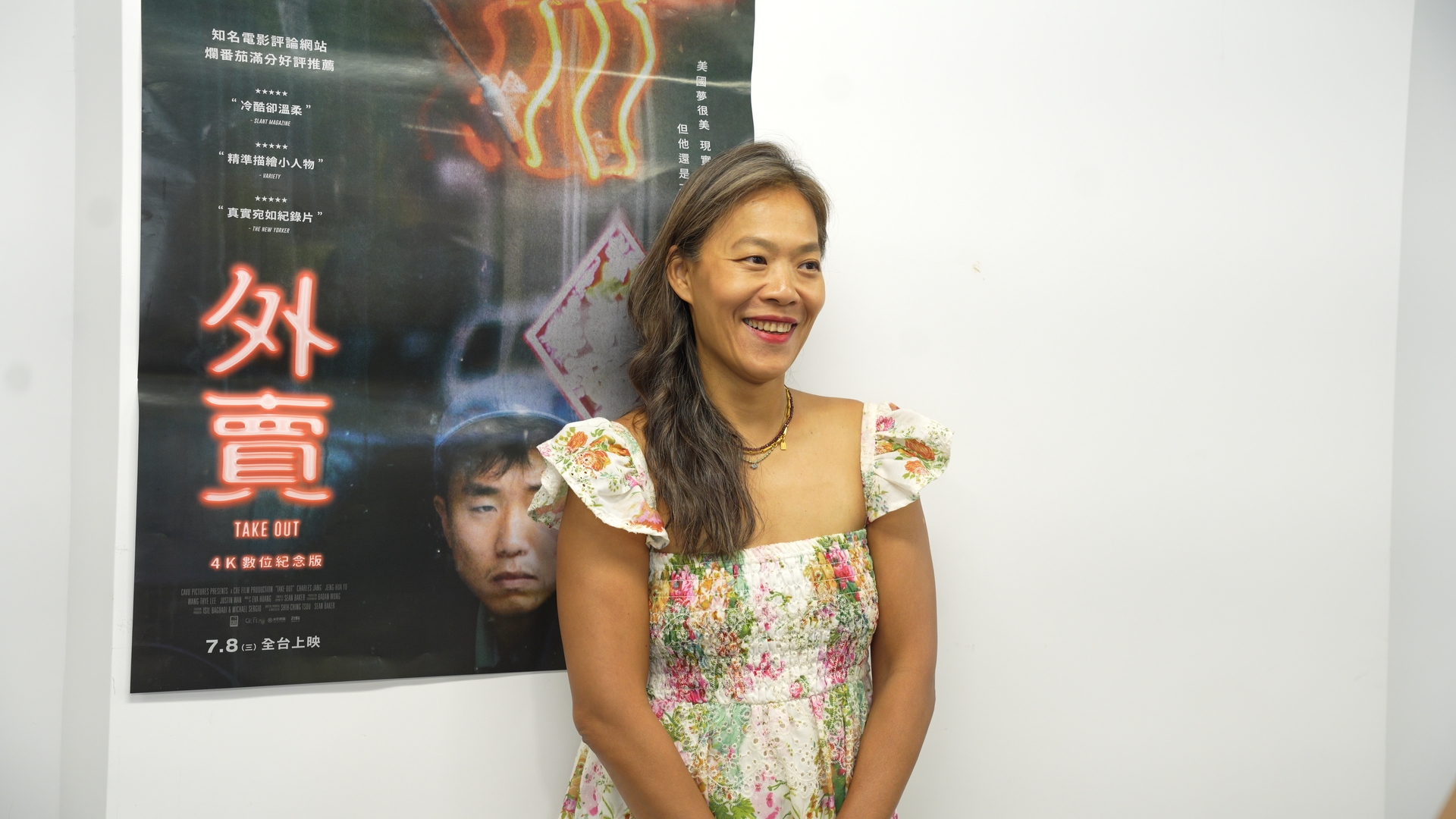
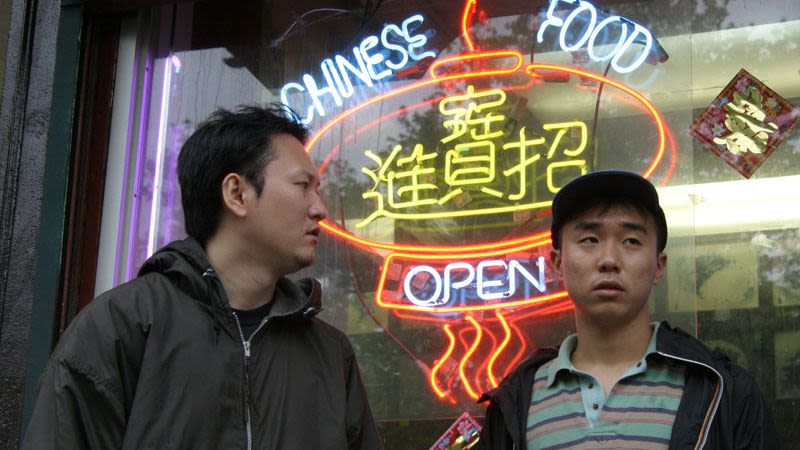
Co-written and co-directed by Shih-Ching Tsou and Sean Baker, Take Out centers its story on a single day in Ming Ding’s life that appears repetitive but is, in fact, relentlessly driven by debt and time. Filmed in a Chinese restaurant that remained open for business, the film captures customers haggling with the woman at the counter, the nonstop labor in the kitchen, and the indifference, politeness, and hostility encountered by delivery workers at apartment doors, creating a hybrid texture that blends fiction with documentary realism.
More than twenty years later, Take Out returns to the big screen in Taiwan in a 4K digital restoration. The cityscape and the food delivery industry have changed dramatically, yet scenes like these continue to play out repeatedly today.
The Unchanged Circumstances of Delivery Workers
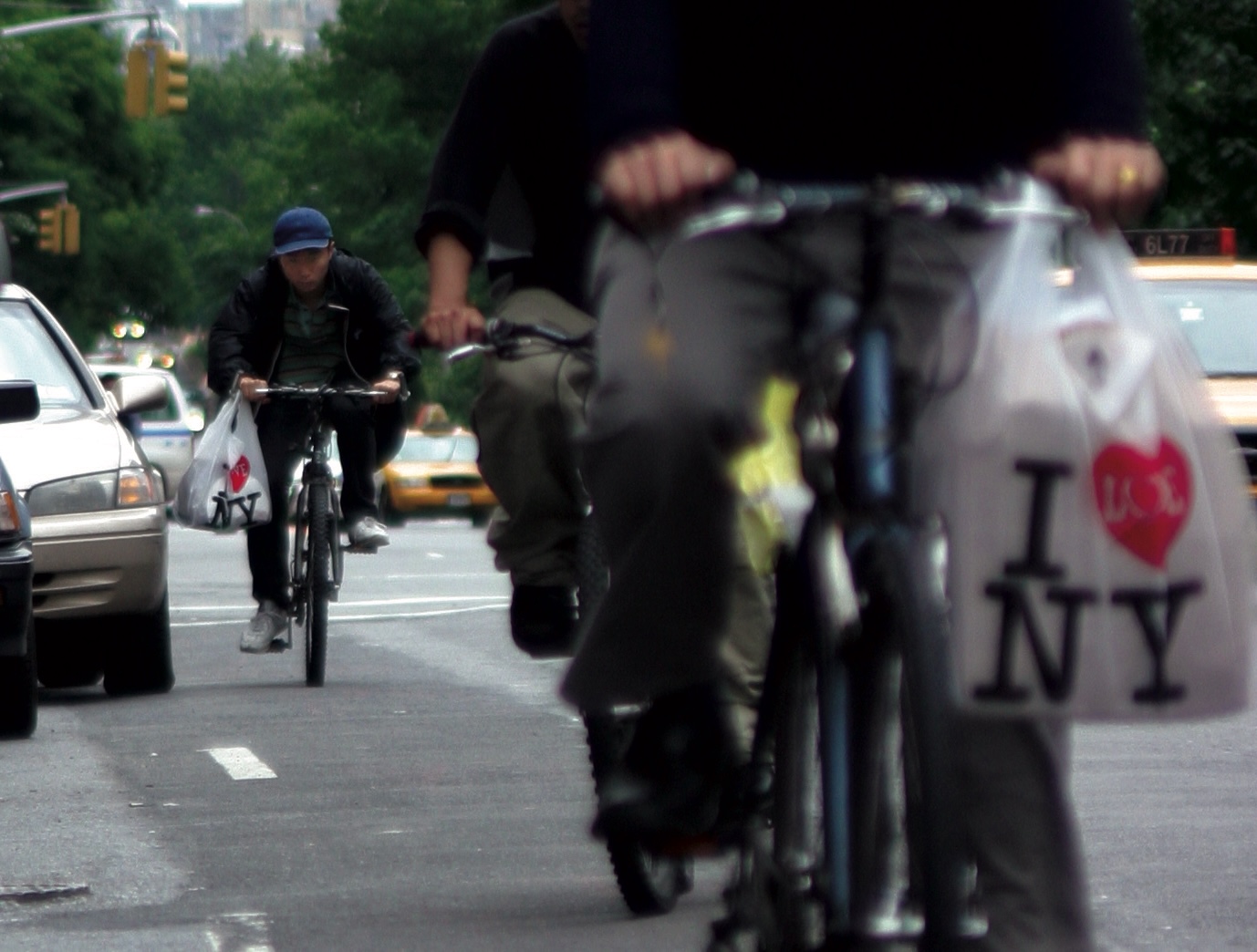
Twenty years ago, the people cycling through New York’s streets to deliver food were mostly employed directly by Chinese restaurants. Today, the rise of delivery platforms has brought almost every kind of restaurant into the ecosystem. Food delivery is no longer a service associated with a particular community or cuisine, but an ordinary part of everyday urban life around the world.
In Shih-Ching Tsou’s view, however, the industry’s expansion has not fundamentally changed the circumstances of delivery workers.
“There are now many delivery platforms in New York, and delivery workers are still predominantly immigrants, although most of them now come from Africa,” Shih-Ching Tsou observes. Delivery services have become increasingly common, yet workers continue to receive meager compensation. Especially after the pandemic, economies and labor markets around the world were shaken, but the workers who sustain this culture of convenience remain in the most precarious positions within the industry. A delivery worker must move faster, keep smiling, and repeatedly thank customers in the hope of receiving a slightly larger tip. Customers see only whether their food arrives on time. Few know that the delivery worker standing outside, soaked from head to toe, may be racing to repay a debt they cannot afford.
Field Research That Began Above a Restaurant
At the time, Shih-Ching Tsou and Sean Baker lived above a Chinese restaurant, where they encountered restaurant workers from China every day. Because Tsou understood Chinese, she began paying attention to the lives they discussed during breaks: how they had reached the United States, how they had fallen into debt, how many hours they worked each day, and how much longer it would take before they could truly begin living their own lives.
“I often saw them riding bicycles on the street, but I never knew their stories.” Driven by curiosity, she began speaking with the restaurant workers, and the outline of the film gradually took shape.
They found a restaurant near West 103rd Street that could serve as a filming location. To the west were relatively affluent neighborhoods, while just a few blocks to the east stood public housing occupied by lower-income residents. As delivery workers cycled back and forth with orders, they also moved between sharply contrasting spheres of urban life.
For two months before filming began, Shih-Ching Tsou spent every day in the restaurant. She spoke with the owner, the employees, and customers who came through the door, observing how the business operated and slowly earning everyone’s trust. By the time production officially began, the crew no longer seemed like outsiders suddenly intruding on the space, but had become closer to a part of the restaurant’s daily life.
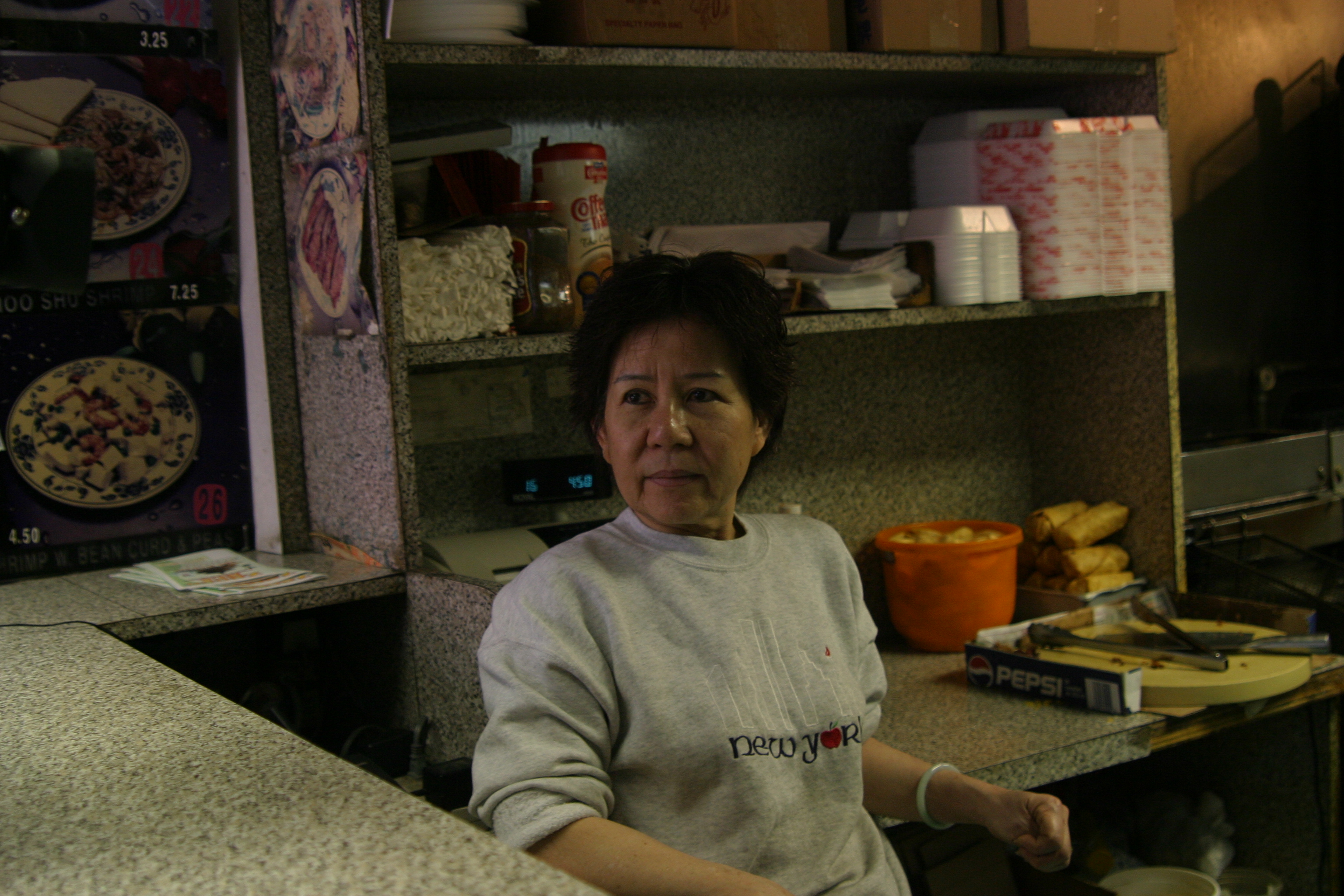
Most of the restaurant characters with substantial dialogue were played by professional actors. However, the “big sister” who answers the telephone and greets customers was the actual manager of the restaurant used as the location. Her trivial negotiations with regular customers over sauces and discounts were also genuine interactions that took place during business hours. Shih-Ching Tsou recalls, “After observing for a while, we still felt that no one was better suited to the role than her.” The other cooks who actually worked at the restaurant were mostly undocumented immigrants who could not show their faces, but they did not disappear entirely from the film. Their hands cooking at the stove and their backs moving through the kitchen were preserved in the frame.
Most of the customers Ming Ding encounters on his deliveries were recruited through the classified advertising website Craigslist. They did not need to play complex roles. They only had to open the doors of their own homes and accept an order of Chinese takeout. These apartments were not constructed sets, but the actual living spaces of the people who appeared on screen. Each time Ming Ding knocks on a door, the audience briefly glimpses another person’s life. Some live in cramped public housing, some travelers search for loose change in well-equipped hotels, and others make no attempt to conceal their impatience with a late delivery worker. The film never explicitly explains each person’s background, yet it emerges through the buildings and furnishings, the content of their conversations, and the differences in the tips they give.
The Rain That Was Never Written into the Script
Entering a real environment also meant accepting variables that could not be arranged in advance. Shih-Ching Tsou only later realized that June 2003 was an unusually rainy month in New York. The downpour that had never been written into the script unexpectedly created some of Take Out’s most difficult-to-replicate images.
The rain intensifies alongside Ming Ding’s anxiety. He races along slippery streets on his bicycle, his clothes clinging to his body, unable to let the food in his hands get wet as time passes without mercy. By the latter part of the film, the rain has almost become an external manifestation of his unease, soaking him until there is nowhere left to hide.
Given the production scale of Take Out, the crew had no budget for rainmaking equipment. At first, Shih-Ching Tsou worried that the weather would disrupt the planned scenes and create continuity problems. It was only when she saw the footage through the camera that she realized the wet asphalt reflecting the streetlights actually helped build the emotional atmosphere. “The more difficult part was that we only had one set of costumes. The actors were completely soaked at the end of every day, so they had to take the clothes home, dry them, and then return to the rain in the same outfits the following day,” Tsou adds.
The restaurant’s business also dictated the filming schedule. As soon as the lunchtime rush began, the crew had to stop filming and wait until the number of customers declined at two or three in the afternoon before starting again. The rain, the flow of customers, and the space’s existing routines would not pause for the film. The filmmakers could only adjust the shoot and search for places where cinema could exist within the gaps of everyday life.
The Beginning of a Creative Method
Shih-Ching Tsou describes Take Out as an important starting point for all the works that she and Sean Baker subsequently made. In this film, the two filmmakers fully practiced a method for the first time: entering a real community and observing it over an extended period, incorporating stories they had actually heard into the screenplay, finding people on the street who could exist naturally in front of the camera, and filming with lightweight equipment and an extremely small crew so as to disrupt the environment’s original rhythms as little as possible.
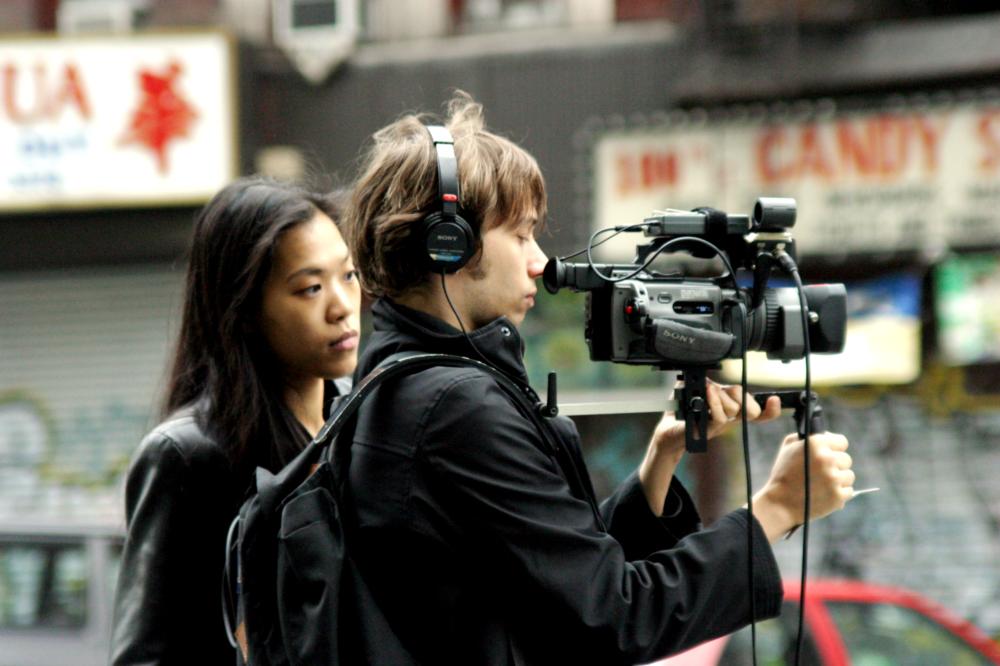
This method did not change as the scale of production increased. From the Chinese restaurant in Take Out to the Tonghua Night Market in Left-Handed Girl, Shih-Ching Tsou has continued to enter real, existing environments, communicating with business owners and observing the surroundings. She allows the filming process to adapt to the location rather than clearing away everyday life and manufacturing a space that merely appears real.
As an immigrant who also left a familiar environment to build a life in New York, Shih-Ching Tsou is no stranger to the unease Ming Ding experiences upon arriving in a new place. For him, food delivery is not merely a job that pays his living expenses, but also a process of adapting to the city. He must cross linguistic and cultural barriers, learn how to navigate neighborhoods with complex public safety conditions, and work out how to deal with all kinds of customers. The scene in which Ming Ding is robbed may seem dramatically charged, but reality was even more brutal. Shih-Ching Tsou recalls that around the time the film was being screened, a Chinese delivery worker was shot and killed in Queens. When fictional events resemble real incidents so closely, the boundary between the two becomes difficult to distinguish.
Yet Shih-Ching Tsou also acknowledges that a fundamental difference remains between herself and the film’s characters. “I could find a way to enter this society, but they had no way of entering it.” Their status as undocumented immigrants isolates them from mainstream institutions, whether voluntarily or involuntarily. They may live in the United States for twenty or thirty years without learning English and rarely venture beyond the social world formed by relatives, friends, restaurants, and people from their hometowns.
This enclosed community is both a limitation and a source of basic protection. Some Chinese restaurants provide employees with accommodation and meals. They work long hours every day, and their lives revolve almost entirely around the restaurant. The crowded residence shown at the beginning of Take Out was an actual living space provided to restaurant employees.
The smuggling journeys Shih-Ching Tsou heard about from them were often extraordinarily long. Some spent three months on small fishing boats and entered the country through Thailand. Others first reached Canada and then tried to swim across the border. Today, more people enter by walking through the mountains from Mexico. “Someone has to guide you every step of the way. Each time the guide changes, another fee is taken from you.” Reaching the United States is not the end of the journey, but the beginning of repaying the debt. Workers must pay intermediary fees while also sending money home to their families. What pursues Ming Ding in Take Out is not simply an overdue payment, but a system of debt that had already formed before he ever set foot in New York.
The film, however, does not portray these people as victims who can only wait to be rescued. They argue and joke around, but they also help one another when someone is in difficulty. Ming Ding’s fellow delivery worker, Yang Sheng, gives him a full day’s delivery orders. The cooks may be sharp-tongued, but they also take the initiative to lend a hand. Their financially strained lives occasionally produce friction, yet they continue to look after one another and maintain their own way of living together.
Seeing Real People and Their Lives
From Chinese restaurant delivery workers to night market vendors, Shih-Ching Tsou’s perspective has consistently remained close to the people who keep cities functioning yet rarely become the central figures of a narrative. She does not, however, describe this choice as a predetermined artistic declaration.
“I am a very curious person.” When she sees an elderly man selling chewing gum on the street, she stops to speak with him, asking where he comes from and why he works there. She does not first decide to make a film about a certain kind of “disadvantaged person” and then search for someone who fits the theme. On the contrary, it is often a particular person who sparks her interest, allowing a story to take on flesh and form through repeated conversations.
This has become a recurring starting point across her different works. Rather than rushing to categorize her characters, she allows their interactions to enter the frame naturally. The way a person moves through a single day often reveals more about the world they inhabit than any predetermined conclusion. Take Out is therefore not only a record of New York delivery workers twenty years ago. It also allows audiences to see, with clarity and specificity, the day of the person standing outside the door, soaked from head to toe, who nevertheless delivers the food into the customer’s hands.
More than twenty years have passed. The day depicted on screen ended long ago, while the lives of the people in the film have continued along their own paths. Shih-Ching Tsou remains in contact with the cast. The restaurant manager later moved to another state and ran a dry-cleaning business. She is now retired, and Tsou still occasionally takes her daughter to visit her. These relationships, which have continued to the present day, mean that Take Out is not confined to that period of hardship. The film records a day in which people struggle to survive in a major city, but it does not freeze any of them in the most difficult moment of their lives.
Interview and article/Aying Sung
Photos courtesy of/Shih-Ching Tsou, Light Year Images