1992
Berlin International Film Festival
金熊獎提名

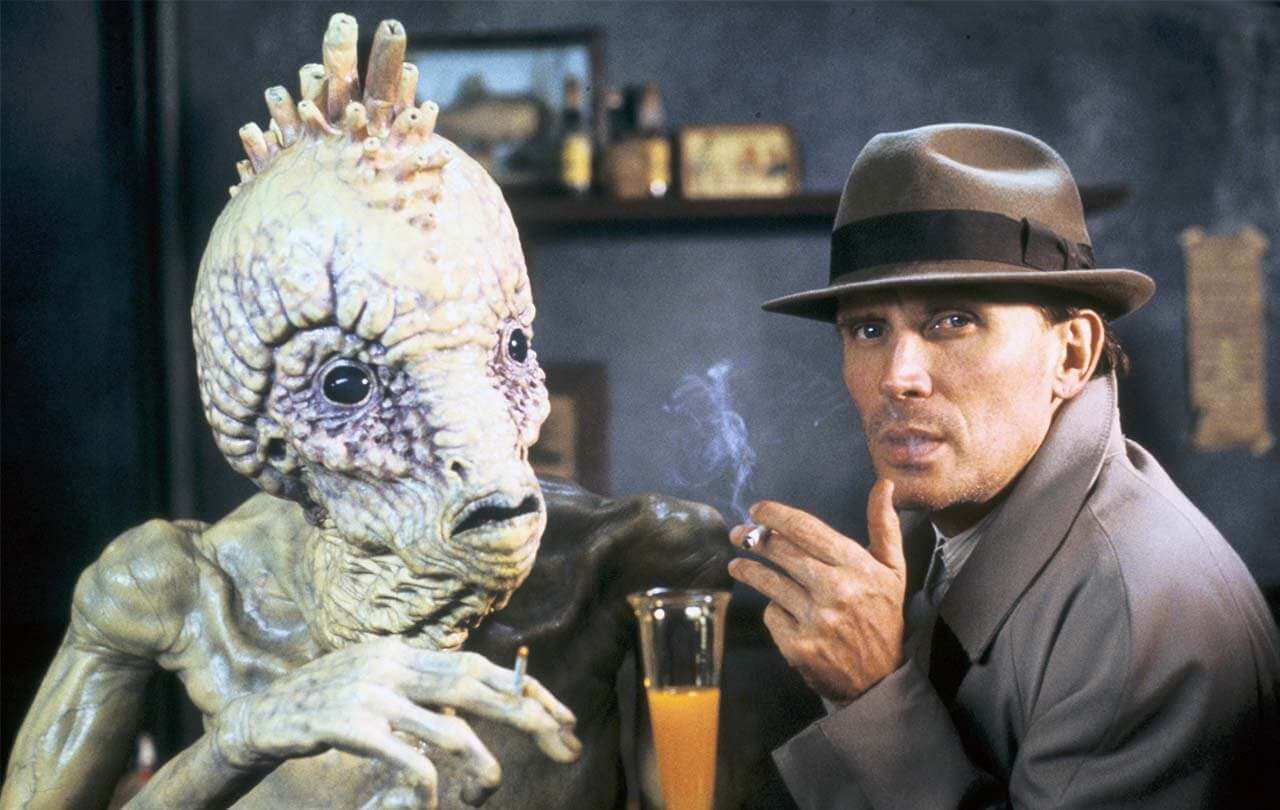
Directed by 大衛・柯能堡
金熊獎提名

柯能堡展現出無懈可擊的改編能力,將頗有難度的威廉布洛斯作品與其精神化為《裸體午餐》,拍出垮掉的一代、拍出如何以文學作為卡夫卡式的高潮與沉淪,驚艷無比!
電影中主角每次嗑藥,都會將打字機幻想成一個肛門會説話的甲蟲。這個比喻其實很符合打字機的特點,即又能打字,又能吐字。無論是甲蟲還是肛門,都讓一般人感到惡心,是否作者想表達文字創作是一件讓人惡心的事呢?這就不得而知了。電影結尾,主角要過關時,海關讓其寫一段文字來證明作家的身份,主角又像電影開頭時用一個冒險游戲誤殺了他的妻子,然後他就過了海關。這是否暗示了文字創作者的創造内容總是會「誤殺」某些人?
11:36 YELLPW STAFFE
大衛柯能堡的暴力美學和肉體恐怖,在本片中透過打字機骯髒齷齰的形象呈現。電影透過故事的不可預期性以及混亂感,同樣展現出原著小說中參差暴戾的語句和結構,並將原著具體化為紛亂骯髒的視覺美學。
7:05 回顧這部作品,是一個關於創作的故事,其複雜性,不可被解釋、困擾、和糾纏,成癮。我想創作過程這個共通語言是最好連結原作作者(小說)、和部分觀眾,也是片中提煉出最具普世的價值(就這個時間點而言)。
令人印象深刻的特殊化妝與實體道具,有著現今cg特效難以達到的生猛力度。除了在視覺上締造出的奇觀之外,文本所帶出的概念以及文學性也值得反覆咀嚼。原作作為一部極為抽象,概念化的文學作品,似乎不存在電影改編的可能。但儘管如此,大衛柯能堡依舊理出了自己的一套切入、解構再重構的邏輯,並借鑑卡夫卡變形記的元素與精神,做出了具有影像呈現價值,概念與文學性卻不輸原作的再創作。
<<裸體午餐>>在電影情節裡面,虛實交錯,讓人到最後一幕都還在懷疑,我究竟是在男主角的幻覺裡,還是走在現實中。 當男主角借著藥物獲取靈感寫作時,真實的想法會借著物體的轉化形成,然而所有的毒藥、酒精、性慾,都不是男主角的靈感繆思,真正使男主角能繼續寫下去的,是失去愛人的痛苦,從開頭到結尾的兩次射殺,足以代表,此作品表述者認為沒有經歷過逝去愛人的苦痛,是無法進入文學的領域與世界裡的。
「超寫實主義電影的關鍵元素,即在故事及角色建構上帶有精神分析討論。」 在開始進入主角比爾的幻想時,直覺想起1977年的黑白電影《橡皮頭》,噁心的怪物長相,充滿性暗示的器官,在不斷直視湧現的潛意識中,更透露了被壓抑住的同性戀傾向。 令我意外的是,在劇情轉折上的荒謬,卻不會「不合理」,故事流暢地一點一滴揭開主角的傷疤,一個寫不出什麼東西的作家,成為了癮君子,而看似因為吸毒成癮才有的幻覺,其實用以掩飾是對於意外殺死妻子的痛,但這樣越是埋藏的內疚,才越是一個人所忘不掉的。 而最後的結局相當有趣,比爾因為巨大的創傷成為了作家,為了繼續推動這個身分,就必須持續面對著內心深淵的痛楚,重複且無法停止。
大衛柯能堡改編經典爭議小說的電影,片中對於謀殺、藥物使用和同性戀傾向的暗示在化為影像後極具創意,可謂「既直白又抽象」。本片有趣在於作者如何轉化一個角色的內心世界,並再造一個截然不同的虛構空間,然後建立出一段完整的故事。
What makes a classic a classic is its ability to awaken a sense of longing for times past. Timeless and ever-enchanting, classics are meant to be savored, again and again.
I remember the summer break of my sophomore year—because I took over organizing our department’s cinema festival, I decided to stay in the school dorm all summer, immersing myself in a personal, sensory journey of film appreciation. One afternoon in the campus library, I randomly picked up Tsai Ming-liang’s The River. To my surprise, it quietly and calmly depicted the atypical family experiences I had kept buried deep inside. That film stayed with me—a teenager full of anxiety about life, unsure whether I could truly take responsibility for myself—through those idle, languid summer days. Back then, there was no fiber-optic internet, no AI-powered smartphones. Just light and shadow, casting a humorous yet absurd gaze upon the hardships of reality. So here I am, recommending this film—let yourself sink into the dreamscape of its story, and let it echo the realism of our own lives.
Humans pride themselves on being "rational animals," yet in waving the banner of reason, how often do we overlook the passions and turbulence that defy reduction? Are our actions truly as orderly and logical as we believe? At what point does the pursuit of order and truth tip into the realm of madness? Perhaps "strangeness" is an essential part of being human — and the boundary between reason and insanity is far thinner than we imagine.
Isolated by the vast ocean, Taiwan has preserved the insularity and self-evident nature of its micro-evolutionary cultural identity. At the same time, its ever-shifting landscapes and unique geopolitical position have long subjected the island to waves of diverse cultural influences. As a result, the people of Taiwan have developed remarkable adaptability in sharing resources and integrating cultures, along with a high receptivity to external information. These vivid and agile characteristics are deeply embedded in Taiwan’s cultural DNA, shaping what we call its unique form of “elastic connectivity.” For the 2023 Taiwan Design Week, the Taiwan Design Research Institute collaborates with Giloo Documentary to present an online film program. Curated by Frank Huang, Cho-Hao Wu, and the curatorial team, the selection of films explores possibilities of departure and displacement within the tension between the virtual and the real. This program urges us to reflect on the essence of creation in an age defined by rapid consumption and AI-driven change, engaging with a contemporary world saturated in virtual fantasy through critical and poetic dialogue.
You hike the trails, you chase the sound, You dive where silent depths are found. (And overtime with no one paid, Fall hard for love that quickly fades.) I dream of lands where horses run, Of chopping wood beneath the sun. (But diets fail, my wallet’s bare — Still chasing clouds, not getting there.) If wounds are life’s unspoken part, Then let me bleed through books and art. Romance — a sickness? I’ll take the fall. I want it all — The high, the hurt, The rise, the sprawl.